Demand greater accountability, transparency before ST3 expands
KEN LAMBERT / THE SEATTLE TIMES
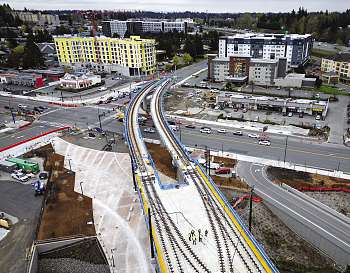
Our region will see only a 6% reduction in greenhouse gases from light rail while the regional goal is 80%, and huge greenhouse gas emissions from ST3 construction, such as the Lynnwood station (pictured), aren’t being counted, write the authors.
Our region will see only a 6% reduction in greenhouse gases from light rail while the regional goal is 80%, and huge greenhouse gas emissions from ST3 construction, such as the Lynnwood station (pictured), aren’t being counted, write the authors.


After 28 years of promises, enough is enough. Before Sound Transit breaks another inch of ground, it’s time to call a timeout and demand accountability for projects that go wildly over budget and vastly under-deliver. We want voters to realize there are much more cost-effective and faster ways to increase transit ridership.
We are pro-transit and in favor of solutions that meet the needs of drivers, cyclists and transit riders to get where they want to go with options that best fit their needs. Transit ridership is drastically lower since the pandemic.
We’re not commuting as much as we used to, and in the Seattle area, 35% of us are working from home.
Fortunately, ST3 is still in the planning stages. For a fraction of the current $148 billion price tag, we could provide communities faster and better electric transit in years, not decades, in ways including investments in alternatives like bus rapid transit, van pools, carpools, electric bikes and public and private on-demand vans and shuttles.
These are the very solutions that make it possible for many to access transit.
Let’s compare what we’ve been promised by Sound Transit and what the agency will deliver by 2050, based on Sound Transit and the Puget Sound Regional Council’s data: • Only 3% of all daily trips by car, bus, rail, ferry, bike and on foot in 2050 are forecast to be on ST trains — mostly by existing bus riders who will now have to transfer to light rail.
• Our region will see only a 6% reduction in greenhouse gases from light rail while the regional goal is 80%. Huge greenhouse gas emissions from ST3 construction aren’t being counted.
• Even with light rail in place, the annual increase in hours of traffic delay is forecast at 35%.
Sound Transit doesn’t deliver projects on time or on budget.
Voters last approved $54 billion in 2016 to finish building the entire system. Sound Transit now says it will cost more than $148 billion (including cost overruns from ST1 and ST2).
Meanwhile, roads, ferries, bridges, bike lanes and sidewalks face billion-dollar shortfalls for maintenance, preservation and construction. That could mean even more regressive taxes are coming.
The community and environmental costs of ongoing construction demand accountability.
Hundreds of construction companies, real estate companies and legal firms are making tens of millions from these projects, yet taxpayers are getting a fraction of what was promised at almost triple the price tag approved.
It’s time for a change in direction to make mass transit actually work for our rapidly growing region. This begins with accountability and transparency.
Our state, local and federal leaders need to get a full accounting of Sound Transit, its ridership and why costs have soared with little or no impact on road congestion or carbon emission reductions.
Today, the Sound Transit board is appointed. To be accountable, we propose the Sound Transit board be directly elected by districts instead.
For more information, go to smartertransit.org. And call your legislators to ensure they take action.
Let’s pump the brakes on ST3 and work on a plan that gets everyone, regardless of their transportation choices, moving.
Mike Lonergan is the Pierce County assessor and treasurer.
Dave Teitzel is a former Edmonds City Council member.