Seattle leaders: Put some teeth in our tree ordinance
KEN LAMBERT / THE SEATTLE TIMES, 2022
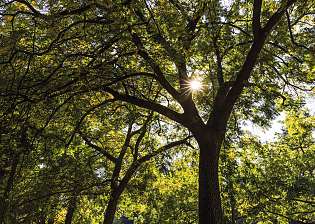
Between 2016 and 2021, the city of Seattle lost 255 acres — 1.7% — of its tree canopy, an area equivalent in size to Green Lake, writes the author. Pictured are trees lining Green Lake in Seattle.
Between 2016 and 2021, the city of Seattle lost 255 acres — 1.7% — of its tree canopy, an area equivalent in size to Green Lake, writes the author. Pictured are trees lining Green Lake in Seattle.


Seattle’s large trees are disappearing at the very moment we need them most. As our climate warms and development accelerates, the city must do more to protect mature trees that are essential to public health, climate resilience and biodiversity. I urge the new mayor and City Council to take action to protect our trees — an effort that most Seattleites support.
I live in Ravenna, where four of the largest conifer trees in a two square-block area were cut down in the past five years. Unfortunately, this reflects a citywide pattern of incremental loss of mature native trees on private property.
Between 2016 and 2021, the city of Seattle lost 255 acres — 1.7% — of its tree canopy, an area equivalent in size to Green Lake. Some losses are incremental, like those mentioned above, while others result from large development projects that clear entire lots of trees.
Most tree removals are motivated by legitimate safety concerns. However, at least one of the four lost trees referenced above posed no hazard whatsoever and was removed simply because the landowner “didn’t like the looks of it.”
This highlights a critical policy gap: Seattle allows the loss of irreplaceable ecological assets with minimal review and weak enforcement.
When large trees are removed, mitigation requirements are insufficient.
Planting small saplings does not compensate for the loss of 60- to 100-foot conifers that provide decades of accumulated ecological services, including carbon sequestration, stormwater management, air filtration, shade and wildlife habitat.
Seattle’s own Urban Forestry Plan makes this clear. It emphasizes that preserving existing trees is far more effective than replacing them, because it takes decades for trees to reach maturity. The plan also prioritizes evergreen trees, which provide year-round canopy, absorb more carbon dioxide, reduce air pollution and mitigate stormwater during the rainy season.
Despite this guidance, Seattle continues to lose tree canopy. The city’s goal of 30% canopy coverage is modest, yet we are backsliding.
According to Birds Connect Seattle, canopy cover declined from 28.6% in 2016 to 28.1% in 2021.
The stakes are high.
During the June 2021 heat wave, temperatures reached 108 degrees, contributing to hundreds of deaths across the Pacific Northwest.
Trees are among the most effective tools we have to reduce urban heat, protect vulnerable populations and build climate resilience.
Climate Central reports that Seattle ranks among the top five U.S. cities for increased heat risk — an alarming distinction for a city that prides itself on environmental leadership.
Trees and development can and must coexist. Other cities — including Atlanta, Ga.; Charleston, W.V.; Charlotte, N.C.; Little Rock, Ark.; and Tampa and Tallahassee, Fla. — have higher tree canopy coverage than Seattle. Portland, the original “Stumptown,” has a goal of 33%.
Charlotte’s goal is 50%. This is a matter of policy choice, not inevitability.
I urge Mayor Katie Wilson and the City Council to significantly bolster protections for mature trees, especially evergreens; increase meaningful mitigation requirements; and create stronger incentives to preserve trees on private property. If Seattle is to remain livable, equitable and climate-resilient, we must start treating it that way. Improving our weak Tree Ordinance is a good place to start.
Woody Wheeler owns Conservation Catalyst, a birding and natural history firm. He previously worked for The Nature Conservancy, Audubon Society, Seattle Parks Foundation and guided for Naturalist Journeys.
I live in Ravenna, where four of the largest conifer trees in a two square-block area were cut down in the past five years. Unfortunately, this reflects a citywide pattern of incremental loss of mature native trees on private property.
Between 2016 and 2021, the city of Seattle lost 255 acres — 1.7% — of its tree canopy, an area equivalent in size to Green Lake. Some losses are incremental, like those mentioned above, while others result from large development projects that clear entire lots of trees.
Most tree removals are motivated by legitimate safety concerns. However, at least one of the four lost trees referenced above posed no hazard whatsoever and was removed simply because the landowner “didn’t like the looks of it.”
This highlights a critical policy gap: Seattle allows the loss of irreplaceable ecological assets with minimal review and weak enforcement.
When large trees are removed, mitigation requirements are insufficient.
Planting small saplings does not compensate for the loss of 60- to 100-foot conifers that provide decades of accumulated ecological services, including carbon sequestration, stormwater management, air filtration, shade and wildlife habitat.
Seattle’s own Urban Forestry Plan makes this clear. It emphasizes that preserving existing trees is far more effective than replacing them, because it takes decades for trees to reach maturity. The plan also prioritizes evergreen trees, which provide year-round canopy, absorb more carbon dioxide, reduce air pollution and mitigate stormwater during the rainy season.
Despite this guidance, Seattle continues to lose tree canopy. The city’s goal of 30% canopy coverage is modest, yet we are backsliding.
According to Birds Connect Seattle, canopy cover declined from 28.6% in 2016 to 28.1% in 2021.
The stakes are high.
During the June 2021 heat wave, temperatures reached 108 degrees, contributing to hundreds of deaths across the Pacific Northwest.
Trees are among the most effective tools we have to reduce urban heat, protect vulnerable populations and build climate resilience.
Climate Central reports that Seattle ranks among the top five U.S. cities for increased heat risk — an alarming distinction for a city that prides itself on environmental leadership.
Trees and development can and must coexist. Other cities — including Atlanta, Ga.; Charleston, W.V.; Charlotte, N.C.; Little Rock, Ark.; and Tampa and Tallahassee, Fla. — have higher tree canopy coverage than Seattle. Portland, the original “Stumptown,” has a goal of 33%.
Charlotte’s goal is 50%. This is a matter of policy choice, not inevitability.
I urge Mayor Katie Wilson and the City Council to significantly bolster protections for mature trees, especially evergreens; increase meaningful mitigation requirements; and create stronger incentives to preserve trees on private property. If Seattle is to remain livable, equitable and climate-resilient, we must start treating it that way. Improving our weak Tree Ordinance is a good place to start.
Woody Wheeler owns Conservation Catalyst, a birding and natural history firm. He previously worked for The Nature Conservancy, Audubon Society, Seattle Parks Foundation and guided for Naturalist Journeys.